
The nitrogen Australia depends on is made from gas. It doesn't have to be.
Our nitrogen economy-built on gas.
Nitrogen is the foundation of three of Australia’s largest industries. It feeds agriculture as urea and other fertilisers. It supplies the mining sector as ammonium nitrate, the principal blasting agent for iron ore, coal and gold. And as technical-grade urea, it makes the AdBlue the national heavy-transport fleet cannot run without.
Almost all of it, whether produced at home or imported, is made from natural gas.
Around 70% of the world’s ammonia is produced by steam-reforming fossil gas, and Australia’s own domestic fleet is overwhelmingly gas-based. That carries two costs: the embodied emissions of a gas-derived product, and direct exposure to gas prices, the same volatility that has repeatedly disrupted supply.
Three markets, one dependence.
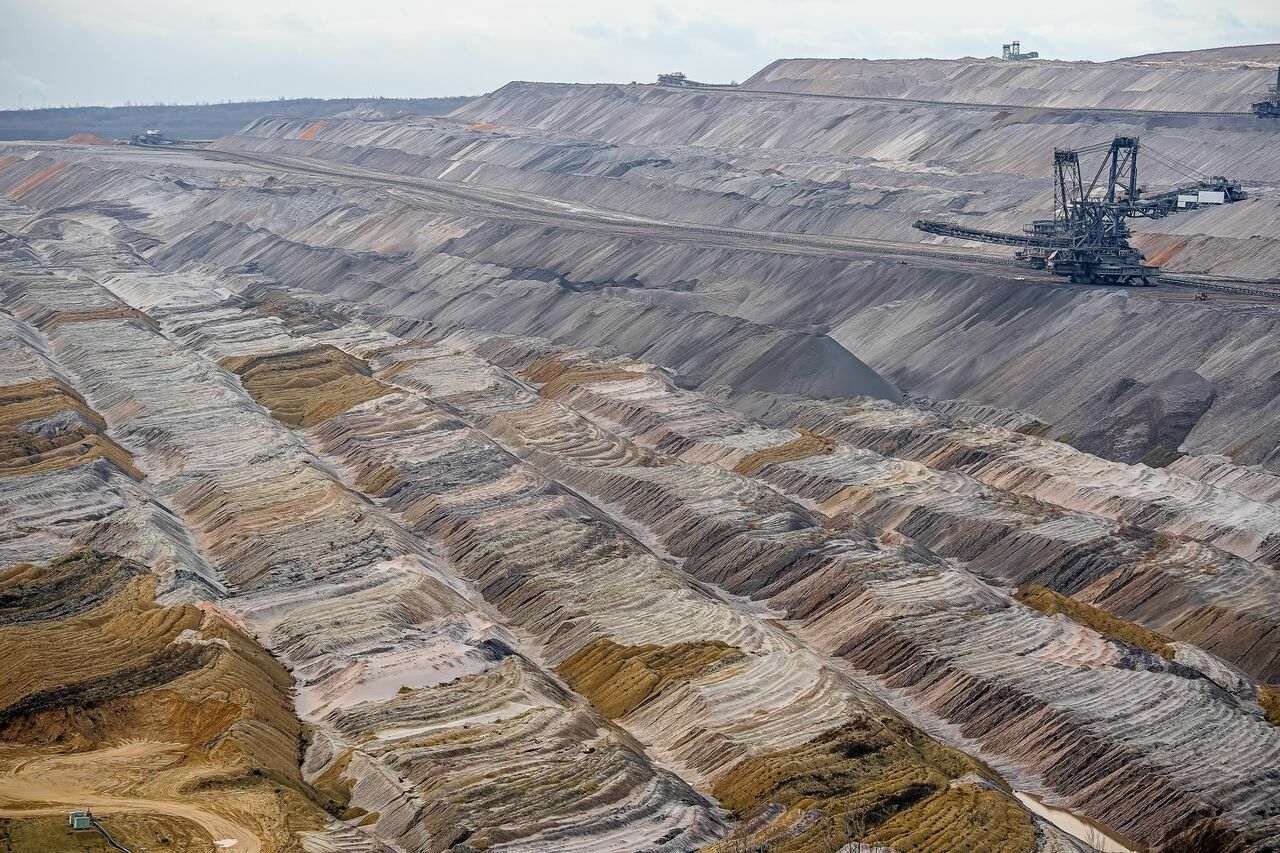
Mining & Explosives
Ammonium nitrate is the principal blasting agent for the iron ore, coal and gold sectors.
Demand is structural, contracted, and grows with resources output. Mining customers now face rising pressure to cut the embodied emissions of what they buy.
Just over half of all ammonia produced in Australia goes to explosives – the single largest domestic use, and one that sits alongside Boolathana rather than across an ocean from it.
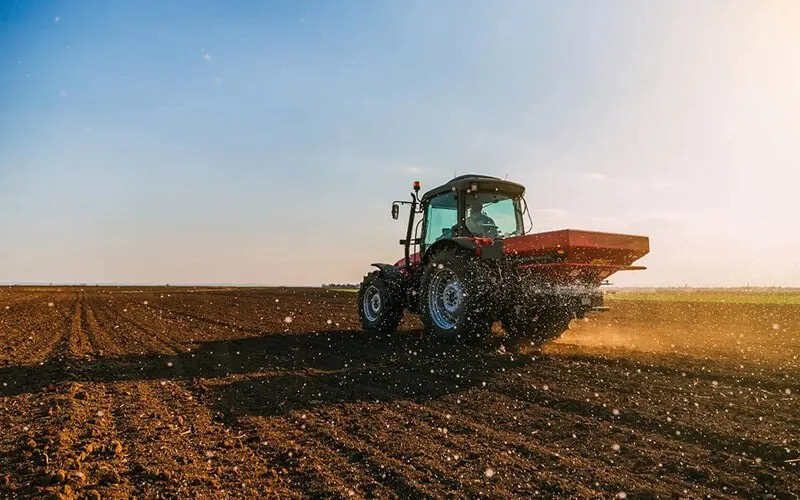
Agriculture
Urea and UAN (urea ammonium nitrate) underpin the grain and horticulture sectors. Ammonia is also a feedstock for phosphate fertilisers such as MAP (monoammonium phosphate) and DAP (diammonium phosphate).
Agriculture is Australia’s clearest sovereign-supply vulnerability. Australia imports the overwhelming majority of its urea, arriving on a seasonal clock that does not wait for shipping to clear.
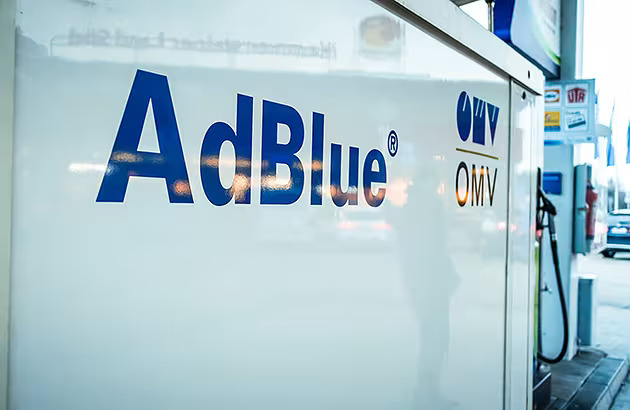
Transport & Industry
Technical-grade urea is the feedstock for AdBlue, which the national heavy-transport fleet cannot run without.
Ammonia also supplies nitric acid, refrigeration and a long tail of industrial chemistry.
Food security, fuel security and decarbonisation. Three problems, one molecule.
A recurring national vulnerability
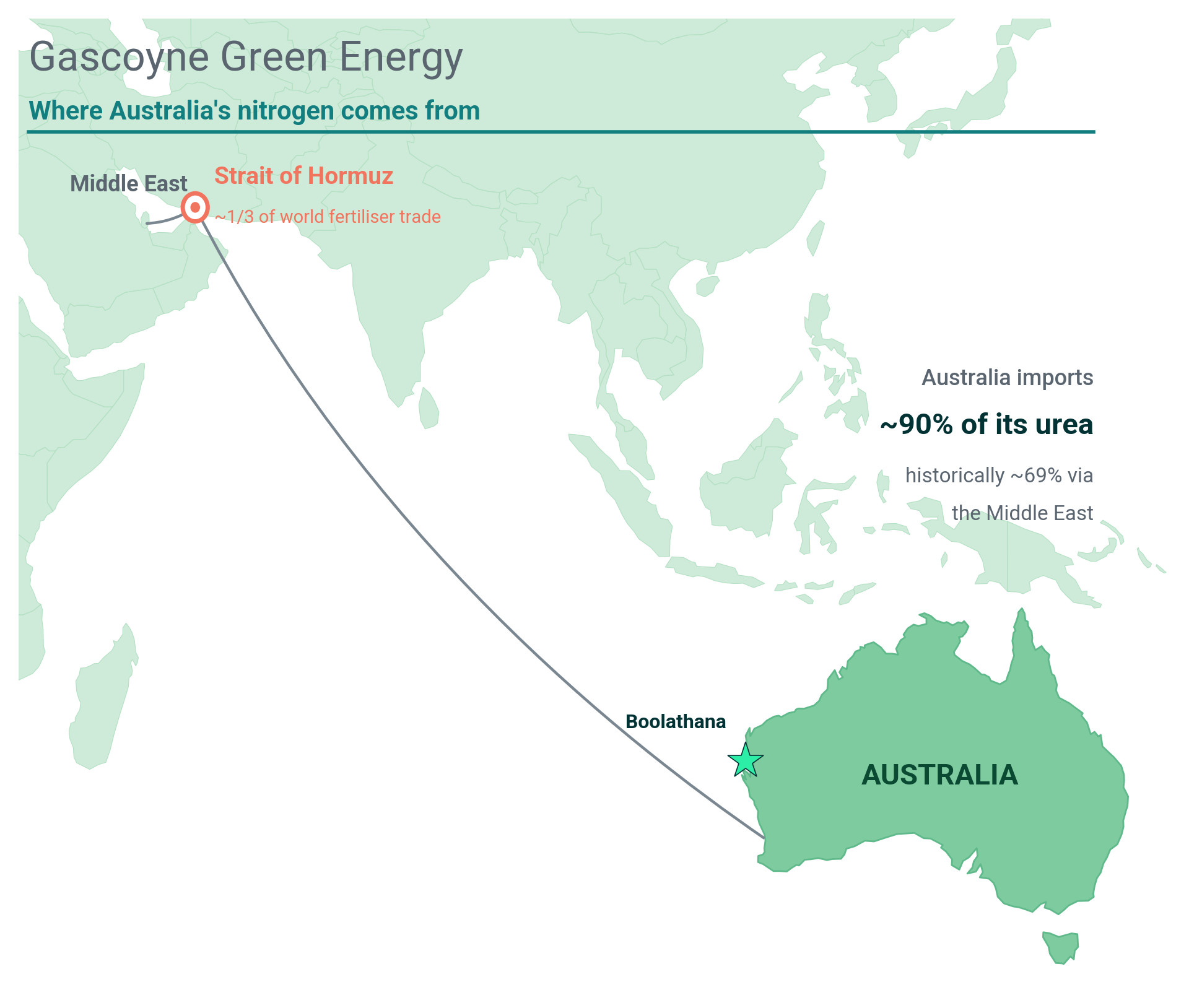
Australia occupies an unusual position: it produces ammonia, yet imports almost all of its finished nitrogen.
It brings in roughly 90% of its urea – around 2.4 million tonnes a year¹, historically close to 69% of it from the Middle East² – through the Strait of Hormuz.
That exposure has become a recurring national vulnerability. In late 2021, China’s restriction of urea exports brought Australia’s AdBlue supply within weeks of failing, threatening to halt the national trucking fleet and forcing the government to convene an emergency taskforce and strike a domestic-production deal³.
In 2026, conflict in the Middle East disrupted shipping through the Strait of Hormuz during the cropping window; imported urea prices rose by more than 60% in weeks, vessels bound for Australia sat stranded in the Gulf, and a government-brokered deal secured only about a fifth of the season’s needs. ⁴ Beneath both events sits a single structural weakness.
Australia lost its last domestic urea manufacturing capability in 2022, when the Gibson Island plant closed after it could not secure affordable long-term gas ⁵ – the same gas dependence that drives the price of the imported product.
The supply vulnerability and the gas dependence are one problem.
Australia has abundant gas and top-decile renewable resources, and still imports almost all its finished nitrogen. Boolathana closes that gap without competing for gas at all – making the same molecule from water, air and renewable electricity, on Australian soil.
Made here, made clean
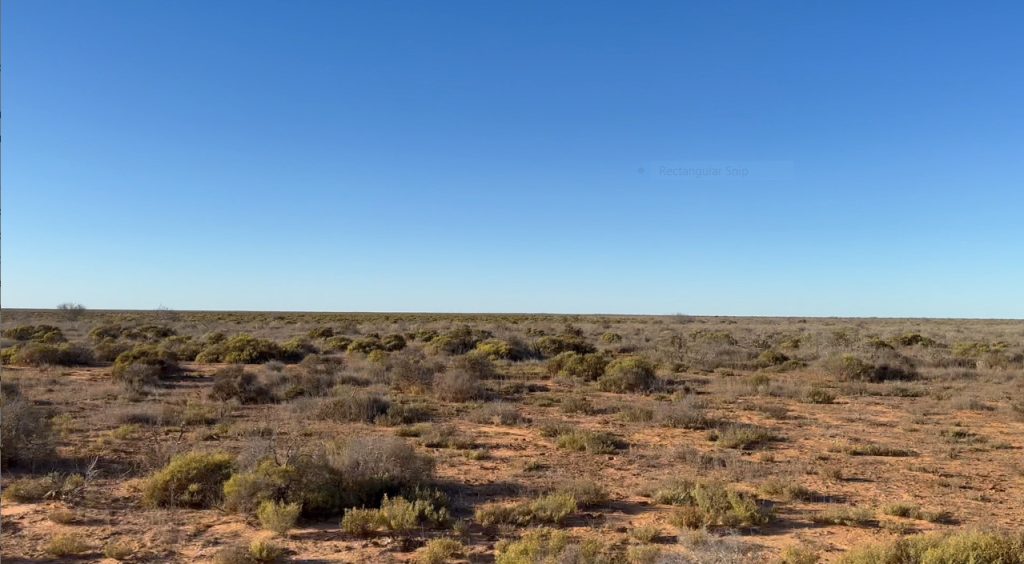

GGE is developing Boolathana to produce green ammonia, the parent molecule of urea, ammonium nitrate and the nitrogen products all three industries depend on. Made on Australian soil rather than imported, it substitutes directly for the gas-based product – closing the supply gap and cutting embodied emissions at once. Because it is made here and made without gas, it sits outside the forces driving the current crisis: the foreign export bans, the maritime chokepoints, and the gas price beneath them all.
The same firm resource that would make Boolathana’s ammonia viable for export would make it equally suited to the domestic market it sits within. ustralia’s existing nitrogen complex – Yara Pilbara on the Burrup, CSBP at Kwinana, and the eastern-states plants – runs on gas, and carries the exposure to prices and carbon that comes with it. Boolathana would add certified-green supply into that same market, from the same state as the mining demand it serves.
As the project advances, that opportunity spans all three streams:
Green urea for agriculture, produced onshore and without gas feedstock.
Green ammonium nitrate for the resources sector, carrying the lower embodied emissions their own customers and regulators increasingly demand.
Green technical-grade nitrogen for the transport and industrial supply chains that have already run short.
Each is an existing, essential, currently gas-made market. We are designing Boolathana is to serve them cleanly, and from home.
The market analysis and cost modelling behind this are available to qualified counterparties under NDA.
Security, not just sustainability
Government and industry now treat domestic production capability as the structural answer to nitrogen supply security: a national-resilience issue, not merely a commercial one.
A certified-green domestic source, made from water, air and renewable electricity, would address food security, fuel security and emissions at once, a combination that stands independent of the export-market policies driving the rest of the green ammonia market.
Boolathana is part of that answer. GGE is seeking the investment to build it.
contact us
Have any questions?
For enquiries about Gascoyne Green Energy or
the Boolathana Project please get in touch.