
AN INDUSTRIAL PLANT, NOT A POWER STATION
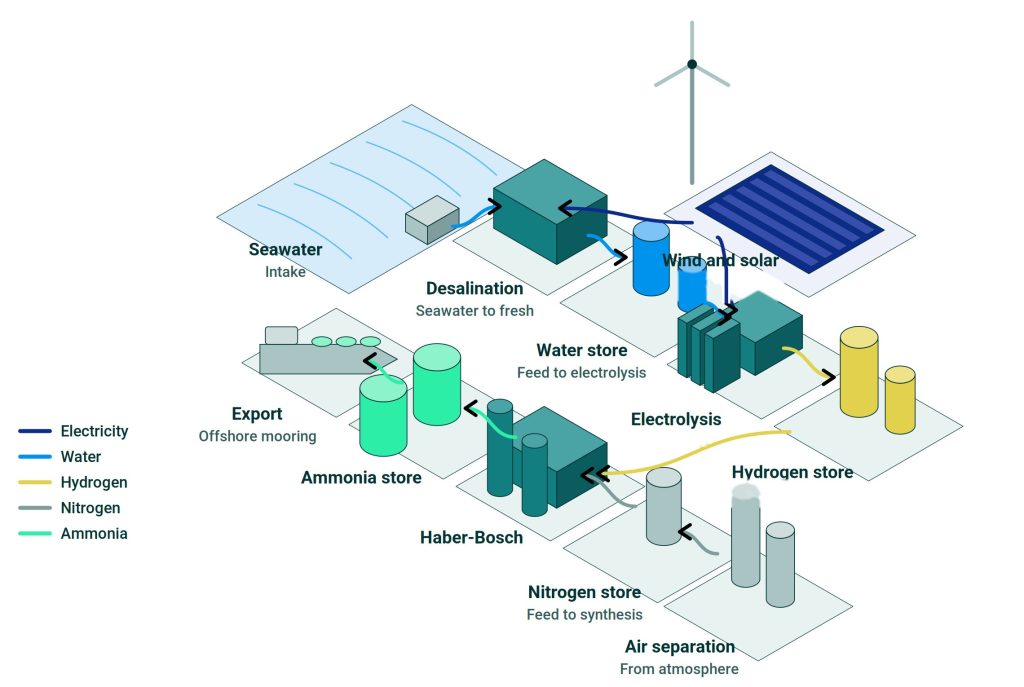
89.6% CAPACITY FACTOR, WITHOUT GAS BACKUP
Industrial Facility
Why that one number decides everything
A gas-fired ammonia plant’s cost is dominated by feedstock, so its economics track the gas price. A green plant has almost no fuel cost. Its cost is the capital sunk into the electrolyser, the synthesis loop, the hydrogen chain and the generation behind them, divided by the tonnes it produces – and tonnes produced scale almost directly with capacity factor.
The consequence is stark. A plant held at 50% carries close to double the capital cost per tonne of the same plant held near 90%, because the same fixed assets are spread over little more than half the output. For green ammonia, capacity factor is the master variable in a way it never is for gas.
The number, and its benchmark
The first reason - the resource is firm before storage is added
Wind at Boolathana is night-dominant. It averages roughly 1,740 MW overnight against about 920 MW at midday – nearly twice as high – and around two-thirds of its energy arrives in hours when solar is producing nothing – being 49.1% of all hours.
The two resources are anti-correlated at −0.24. The combined profile never approaches zero, because wind alone holds the overnight floor. The Resource sets it out in full.
Storage and dispatch can refine the shape of an energy resource. They cannot affordably manufacture a capacity factor the resource does not support. The resource sets the ceiling; the plant design reaches up to it.
The second reason - the electrolyser is deliberately oversized
Storage sized to its job
Once the electrolyser absorbs the generation peaks, curtailment is already low, so the battery adds little to production. It is sized for ride-through, and the dispatch modelling led to a smaller battery than the original configuration carried, not a larger one.
GGE sizes the hydrogen store for endurance rather than for capacity factor.
No gas in the base case
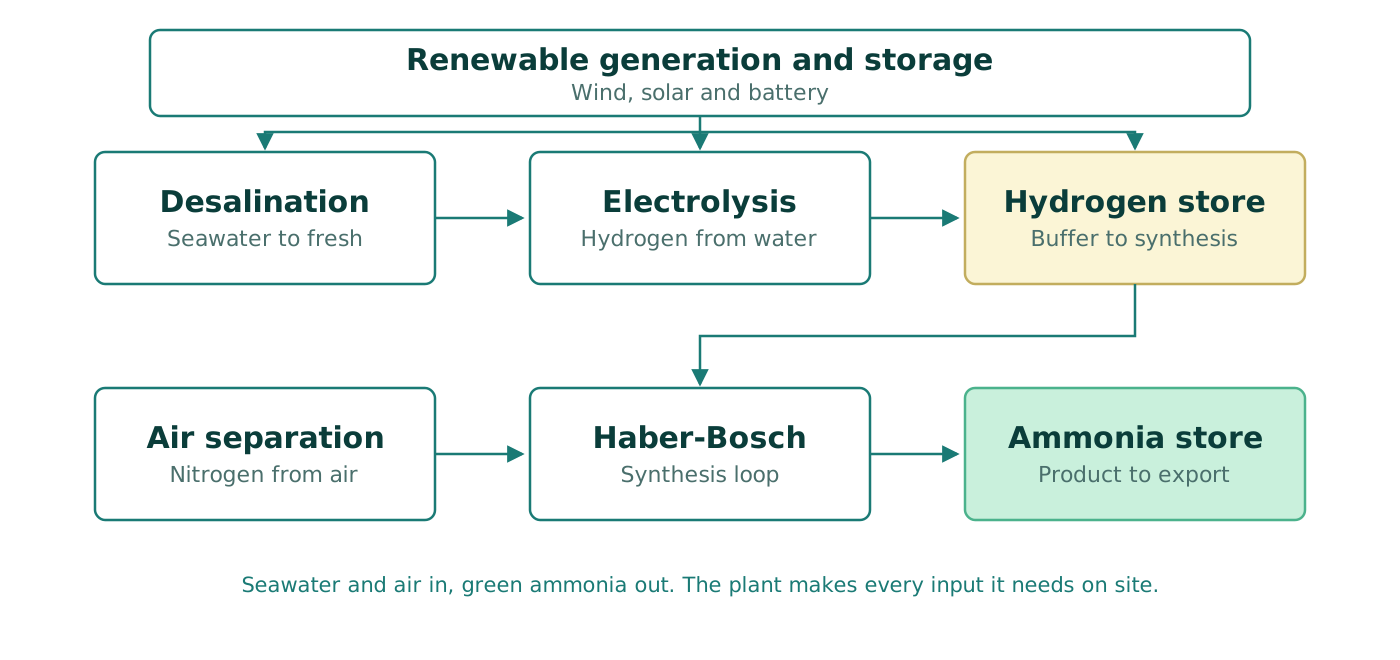
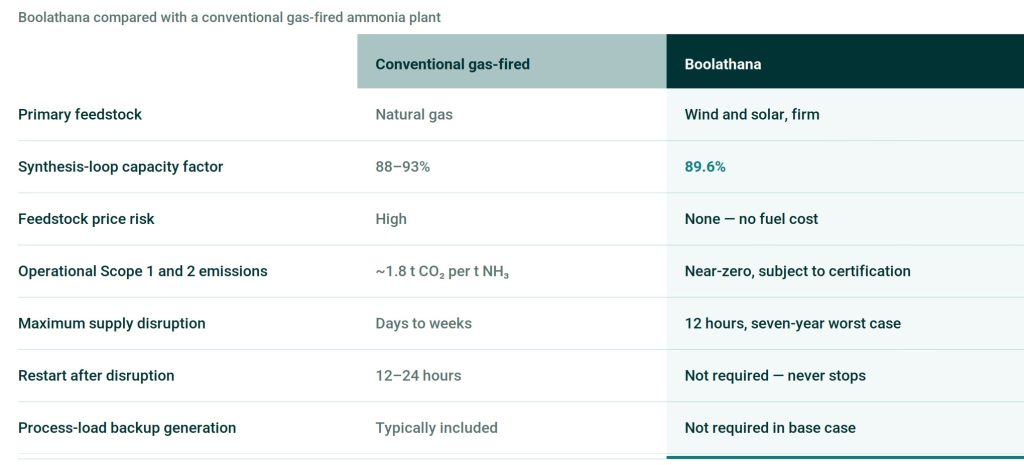
The plant rides through the worst event in the record on stored energy alone, with margin, and without gas.
A combustion fleet sized to keep the process load running would add capital and maintenance, consume saleable ammonia or gas as fuel, and run for a negligible fraction of the year against an event the storage already covers. GGE excludes it from the base dispatch case by design.
This concerns process-load backup only. The plant carries the essential-services backup any industrial facility requires – black-start capability, meaning enough generation to restart the plant from a complete shutdown, uninterruptible power for controls and safety systems, and firewater supply. Those are retained.
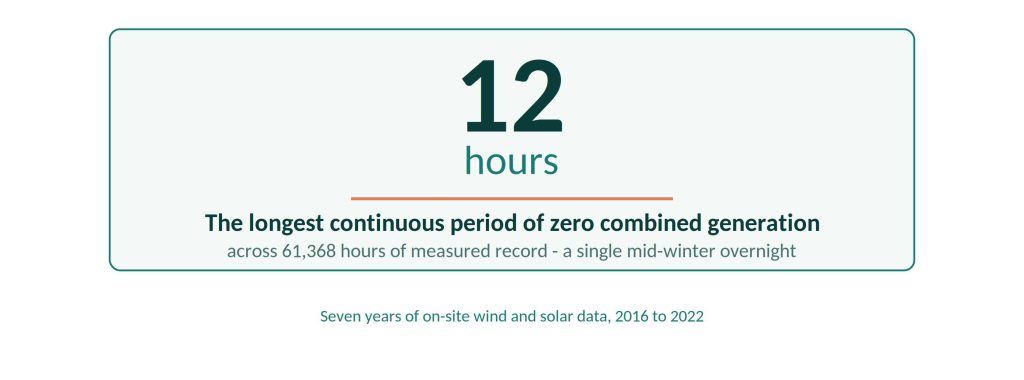
Against a conventional plant
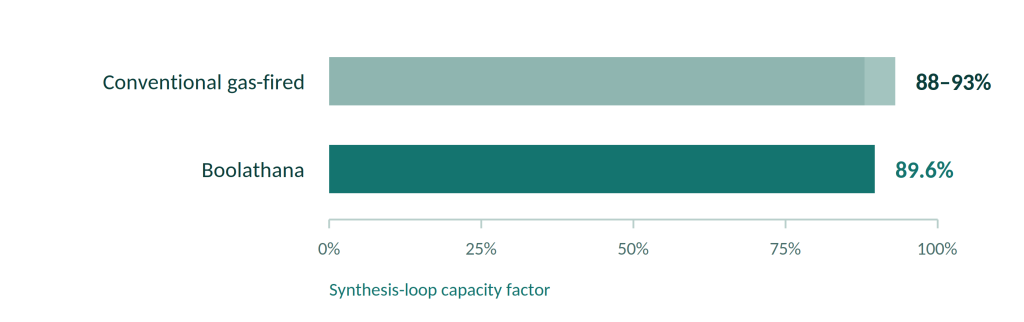
Conventional plant figures are industry reference values. Boolathana figures derive from hourly dispatch modelling over 61,368 hours of site-calibrated resource data, 2016 to 2022. Items subject to vendor and FEED confirmation are identified on this page.
What is proven, and what is not
The dispatch outputs are proven across the full hourly model, calibrated to the validated base case. Plant and storage sizing are dispatch-proven and carry forward to FEED engineering.
Items remain to be confirmed. Electrolyser specific energy consumption awaits vendor confirmation. Certain synthesis-loop operating assumptions are carried to vendor and FEED confirmation. FEED will confirm absolute annual output though the sizing that produces it is robust.
GGE states what its cost figures include – generation, firming, water, export and the synthesis process – rather than quoting a favourable subset. The architecture and cost modelling behind this are available to qualified counterparties under NDA.
Get in touch
Have any questions?
For enquiries about Gascoyne Green Energy or
the GGE Boolathana Project please get in touch.