
MEASURED, NOT ASSUMED
the Boolathana wind and solar resource
Among the Best Anywhere
GGE regards Boolathana as one of the strongest green-ammonia sites identified anywhere in the world. Independent assessment describes a combination that is globally rare: top-decile wind, elite solar and a daily generation profile in which the two resources naturally complement one another.
The resource sits within a single 148,000-hectare landholding with direct Indian Ocean frontage, flat terrain and the scale required for industrial development. Large renewable projects often assemble resources from multiple locations. At Boolathana, they occur together on a single contiguous site.
Recognition of the region reaches beyond the project.
In December 2021 National Energy Resources Australia named the Gascoyne a regional hydrogen technology cluster under National Energy Resources Australia’s Hydrogen Technology Cluster Australia program, an Australian-Government-funded initiative led locally by the Carnarvon Chamber of Commerce, and the project is listed on CSIRO’s national HyResource map of Australian hydrogen projects. These mark the Gascoyne as a hydrogen region of national standing.
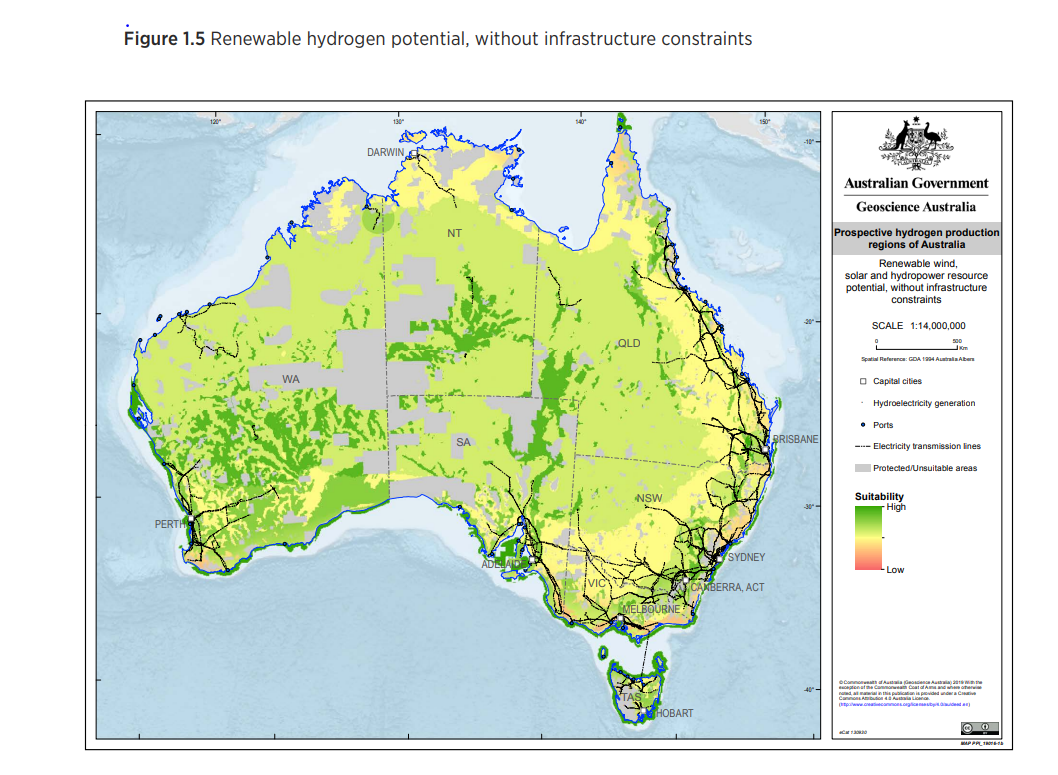
That recognition is cast in terms of hydrogen, and green ammonia is how GGE realises it. Ammonia is hydrogen made storable, shippable and directly usable: hydrogen drawn from water and combined with nitrogen from the air, in a molecule agriculture and industry already depend on. What the region is recognised for is what this site is built to produce. The case for green ammonia is explained on the Boolathana Project page explains the case for green ammonia; here it rests first on the resource itself, and on where the measured record places that resource against the market operator’s own benchmark.
Modelled first - measured higher
Independent wind measurement and validation
Boolathana’s wind was modelled before it was measured. The measurements came in higher.
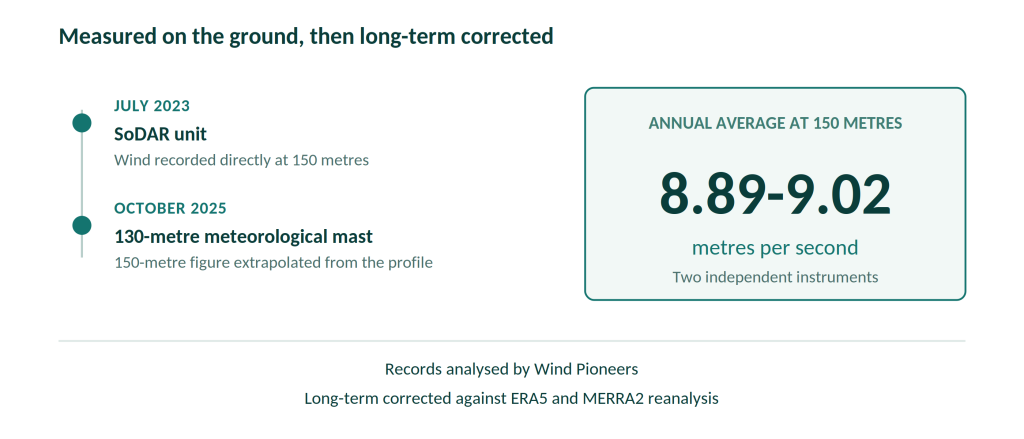
It has been measured on the ground by two independent instruments, then long-term-corrected against decades of reanalysis data.
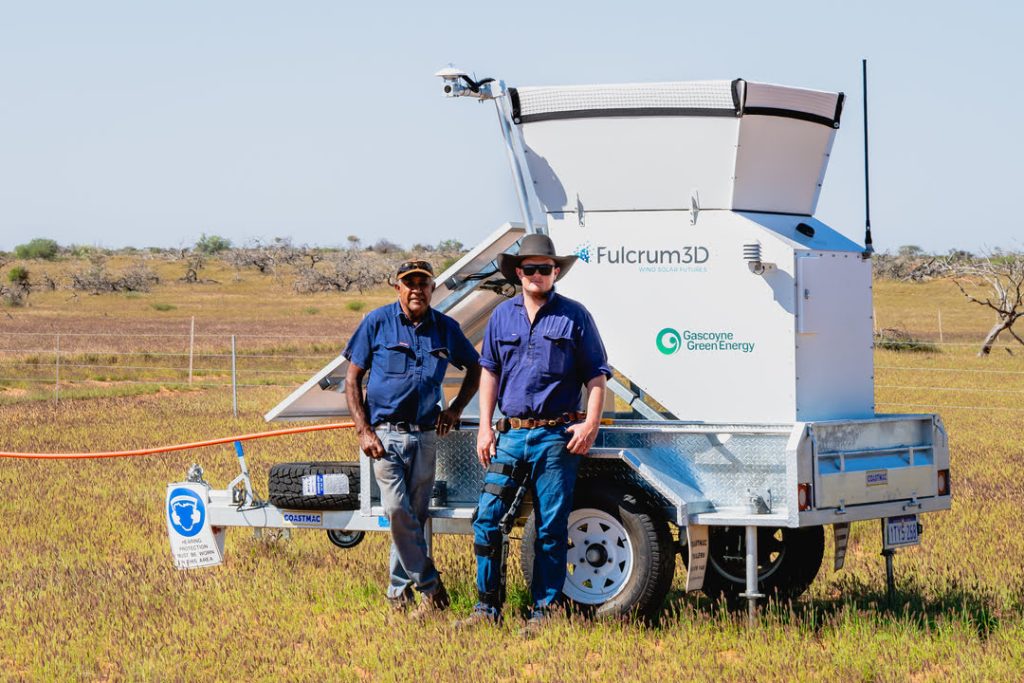
A SoDAR unit has recorded wind directly at 150 metres since July 2023, its data managed by Fulcrum 3D, and a 130-metre meteorological mast was installed in October 2025, its 150-metre figure extrapolated from the instrument profile. Both measured at ten-minute intervals through April 2026. The records were analysed by wind consultants Wind Pioneers and long-term-corrected against ERA5 and MERRA2 reanalysis, using ten nodes of each surrounding the site across periods from 1995 to 2026, with results expressed as 20-year statistics.
The two systems return 150-metre wind speeds of 8.89 and 9.02 metres per second, disagreeing by about 0.13 of a metre per second. The results place Boolathana in the range associated with the highest wind-resource classifications used internationally, independently confirmed using two separate measurement systems.
Strong when solar is not
The significance of the Boolathana wind resource lies not only in its strength but also in its timing.
Independent measurements from both the SoDAR unit and meteorological mast show the same daily pattern: wind falls to a morning minimum, strengthens through the afternoon and remains strongest through the evening and overnight hours.
These are the hours when solar generation is naturally unavailable. The result is a renewable profile in which wind and solar complement one another across the day, helping maintain energy production beyond daylight hours.
Peak Output is not the test
A renewable resource earns its judgement on the energy it delivers over time rather than by brief periods of maximum output.
Boolathana combines strong wind and solar resources with generation patterns that complement one another across the day and through the year.

Wind and Solar Diurnal Profiles - Boolathana
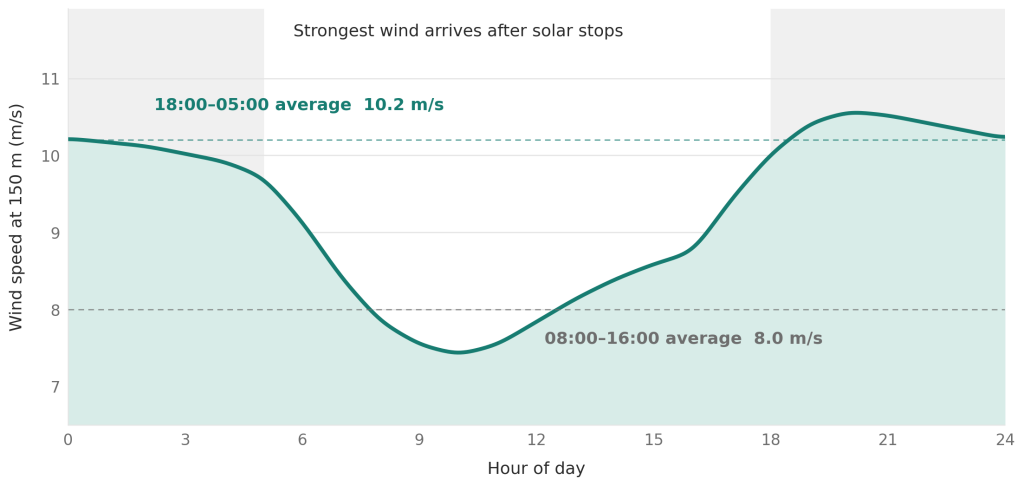
Wind — Wind speed at 150 m by hour of day. Overnight and midday averages are from the SoDAR record; intermediate hours are interpolated.
Most renewable projects lean on solar, so their output falls away predictably every night.
Boolathana’s wind does the opposite. It eases through the morning, builds from early afternoon and holds through the night: from 18:00 to 05:00 the record averages about 10.2 m/s at 150 metres, against about 8.0 m/s in the middle of the day. Two independent instruments, measuring over separate periods, record the same shape. The strongest wind arrives in the hours solar has stopped.
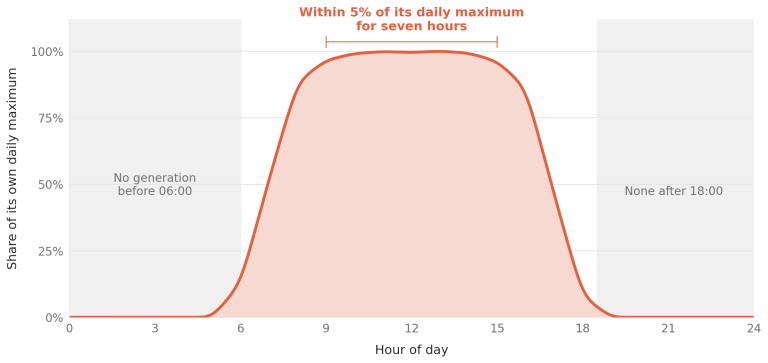
Solar — Boolathana’s solar day, drawn from the site record and shown against its own daily maximum, so the chart gives timing rather than output.
Wind that works at night
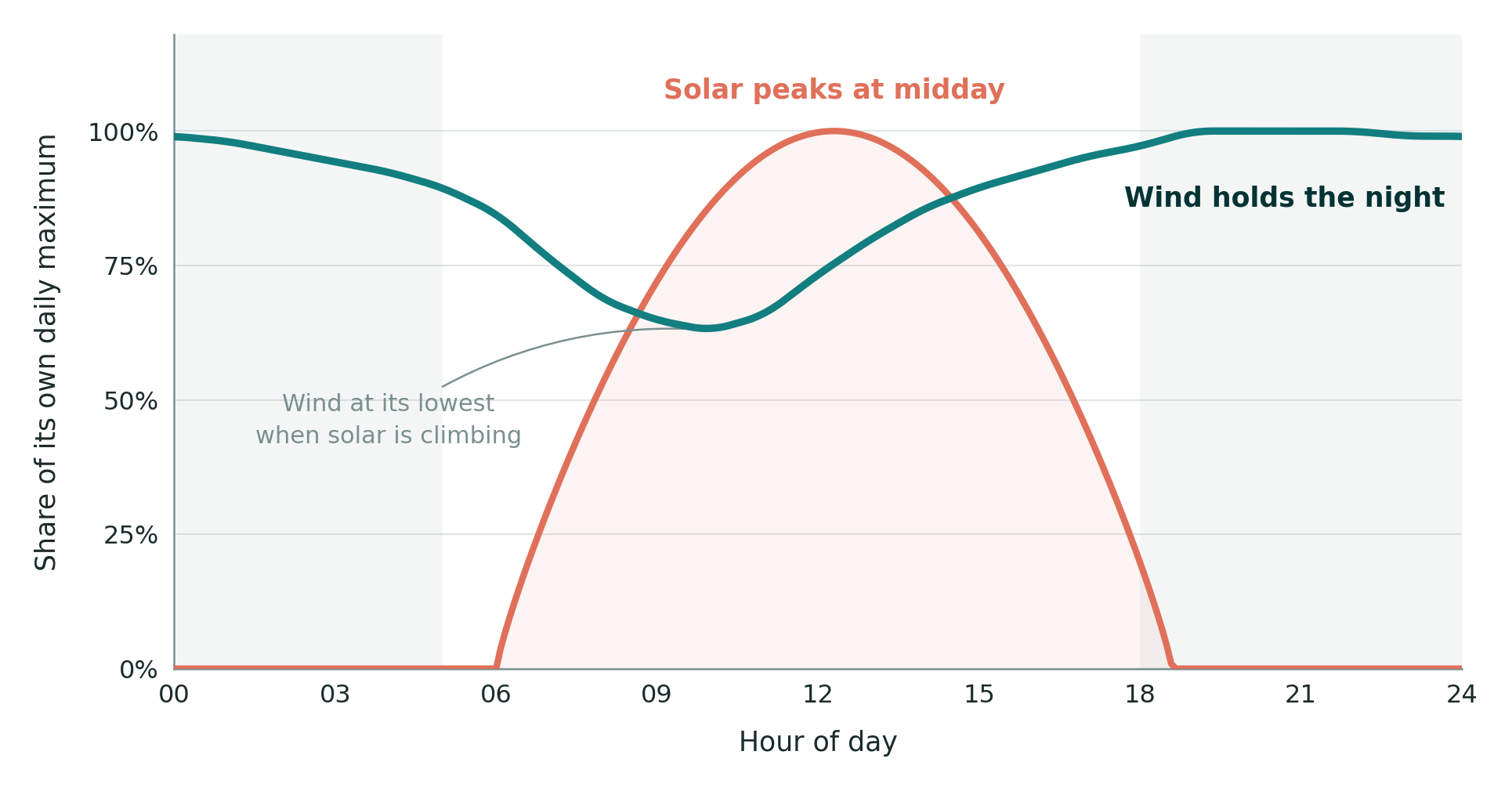
Boolathana’s daily rhythm. Wind profile derived from SoDAR measurements at 150 metres analysed by Wind Pioneers; solar shown as a modelled clear-sky profile. Each is drawn against its own daily maximum, so the chart shows timing rather than output.
Most renewable projects lean on solar, so their output falls away predictably every night.
Boolathana’s wind does the opposite. It eases through the morning, builds from early afternoon and holds through the night: from 6pm to 5am the record averages about 10.2 m/s at 150 metres, against about 8.0 m/s in the middle of the day. Two independent instruments, measuring over separate periods, record the same shape. The strongest wind arrives in the hours solar has stopped.
Why coastal solar performs better
High solar irradiation alone does not guarantee maximum energy production.
Solar modules perform best at moderate temperatures and become less efficient as operating temperatures rise.
Many inland Australian locations combine excellent irradiation with prolonged periods of extreme heat.
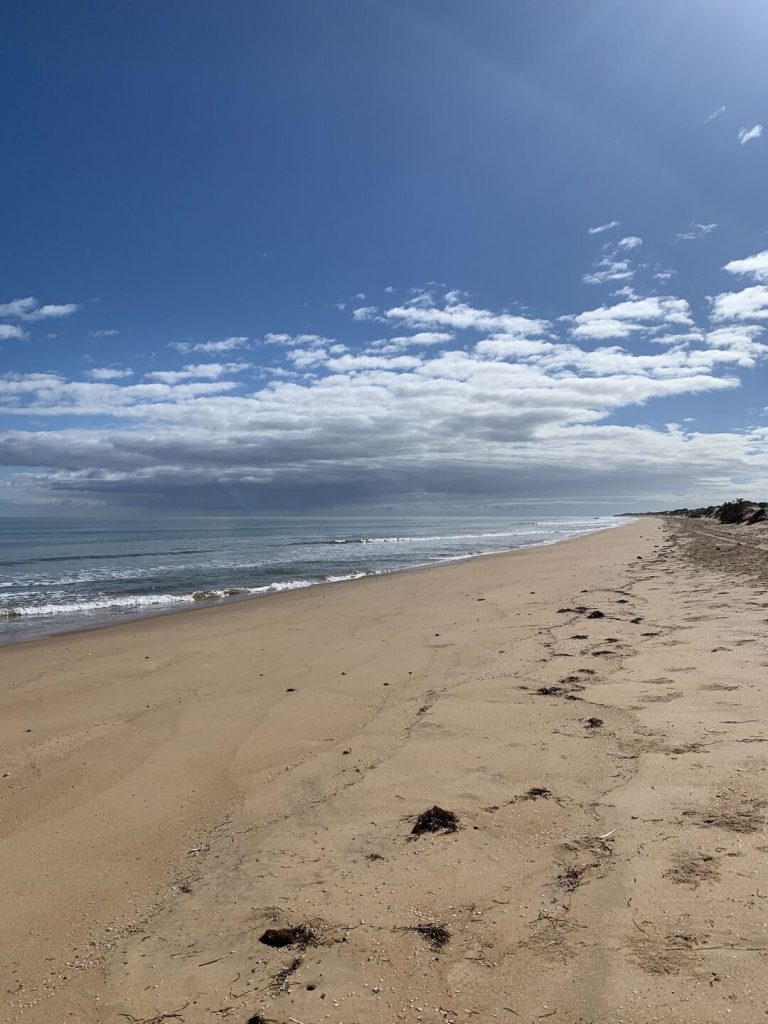
Boolathana’s coastal location benefits from ocean moderation while remaining within one of Australia’s driest regions, creating a combination of strong solar resource, low cloud cover and more favourable operating temperatures.
What the assessment covers
Taken together, the measured results point to a renewable resource of unusual quality.
Strong wind, strong solar and natural complementarity occur on the same site, supported by extensive measurement and independent validation.
The resource characteristics have informed the project’s ongoing engineering, energy-yield and commercial studies.
Detailed modelling, optimisation work and project economics are available to qualified counterparties under NDA.
CONTACT US
Have any questions?
For enquiries about Gascoyne Green Energy or the
GGE Boolathana Project please get in touch.