
BOOLATHANA INTEGRATED RENEWABLE ENERGY PLATFORM
An off-grid green energy platform on a single coastal title north of Carnarvon, producing green ammonia at scale.
One site, every input
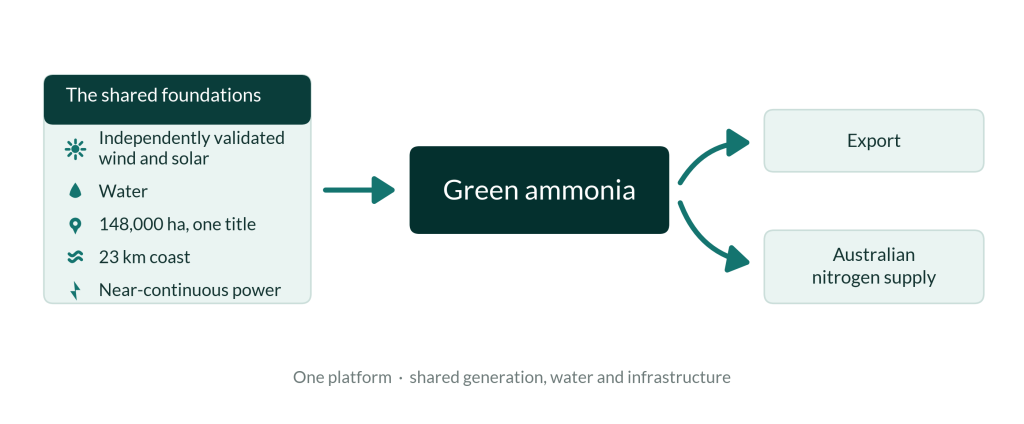
Gascoyne Green Energy (GGE) is a Western Australian renewable energy development company advancing the Boolathana Integrated Renewable Energy Platform – a large-scale, off-grid green ammonia project on the Gascoyne coast. Where many renewable proposals rest on ambition, Boolathana rests on measurement.
Wind Pioneers characterised the wind resource on the single 148,000-hectare coastal landholding, measured on site by two independent instruments and long-term-corrected against decades of reanalysis. Wind and solar oppose each other across the day in a way few sites anywhere can match.
The whole of it rests on one thing the Resource page sets out in full: a top decile renewable resource, independently validated, where wind and solar are naturally opposed across the day so the site can run continuous industrial load without the storage such projects normally need.
Boolathana is one title under one owner. GGE holds a Section 91 licence under the Land Administration Act, secured in 2024, permitting the investigations that take the project to a final investment decision, and holds exclusive access under a separate deed with the pastoral lessee running to December 2030. At FID the pathway converts to a Diversification Lease.
Upstream, wind turbines and infill solar arrays with battery storage. Downstream, a seawater desalination plant, electrolysers splitting water into hydrogen and oxygen, air separation drawing nitrogen from the atmosphere, and a Haber-Bosch train combining the two into ammonia, then refrigerated storage and the line to the mooring. Every input is made on site. Nothing is trucked in and nothing is drawn from a grid, because there is no grid to draw from.
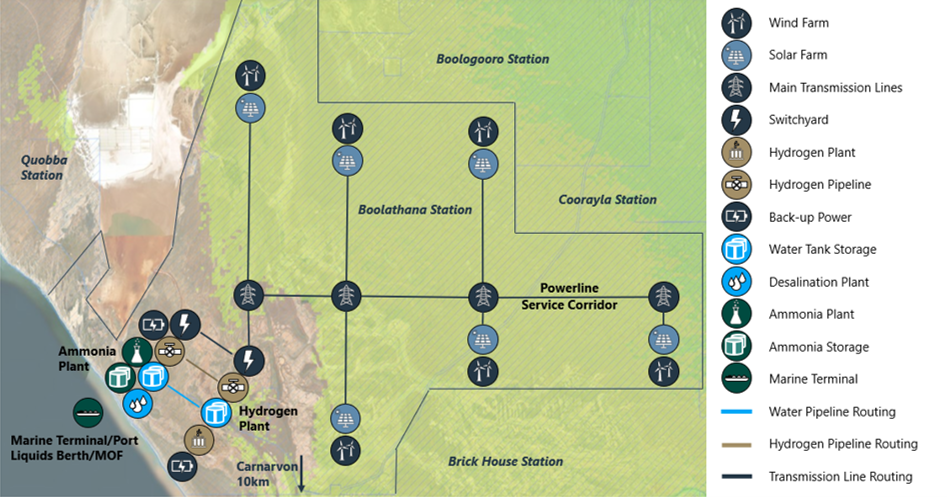
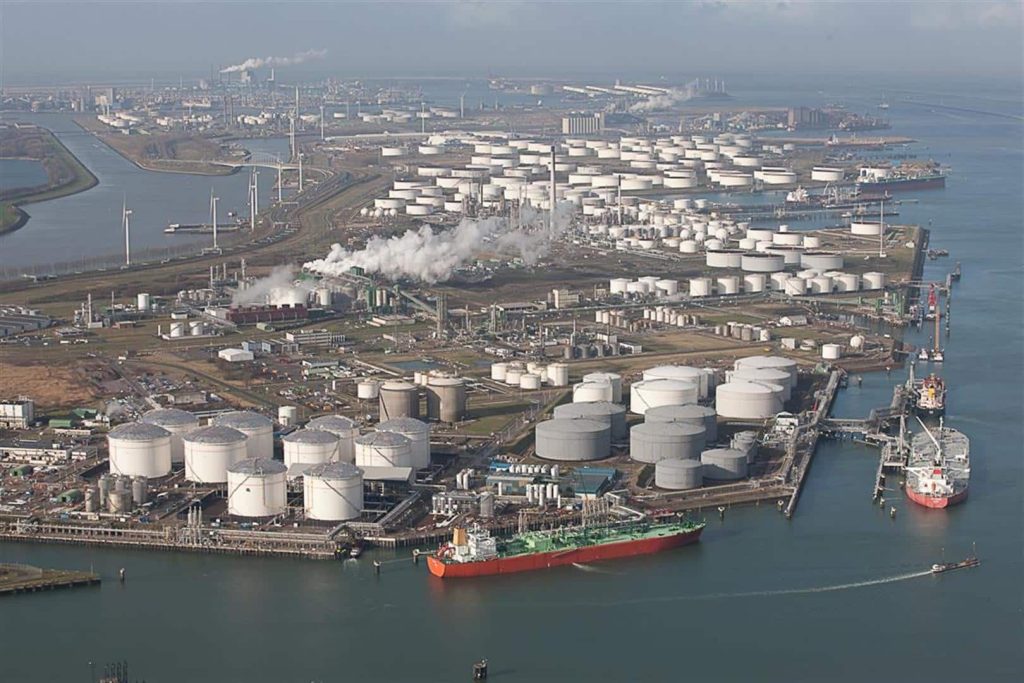
Full build-out concept. Stage 1 exports through an offshore mooring; the marine offloading facility serves construction and heavy module delivery.
Coastal Access
Boolathana fronts 23 kilometres of Indian Ocean coast, sheltered from swell by Dorre and Bernier Islands to the west.
Export runs offshore rather than through a conventional port, and GGE has assessed three configurations.
GGE has costed both a single point mooring and a transhipment arrangement.
A fixed port remains a longer-term possibility. Deep water at 20 metres is accessible from Bejaling Shoals, scoped by the Gascoyne Development Commission as a deep-water port site in 2010 and confirmed in 2023. But GGE expects an offshore facility to cost less, with a smaller environmental footprint.
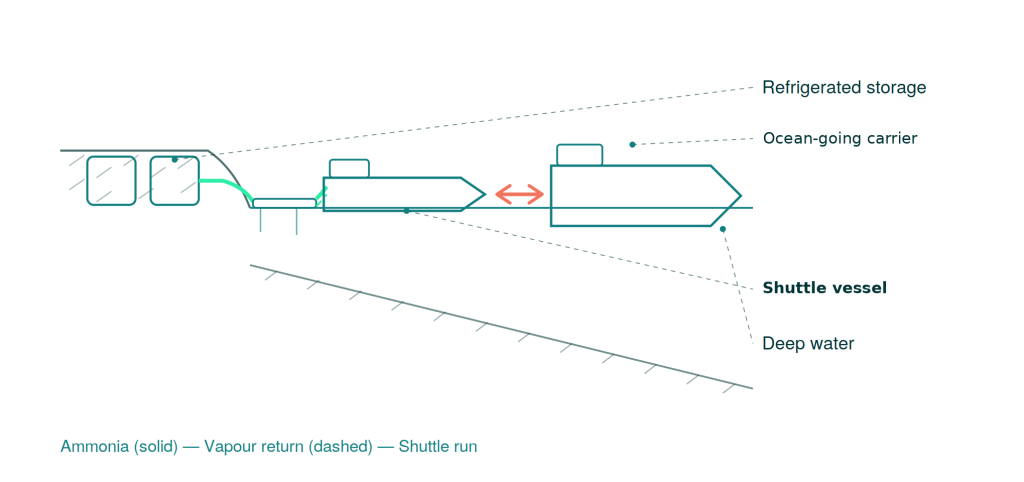
Transhipment. A shuttle loads at a shallow berth and runs out to a carrier in deep water, three round trips a day.

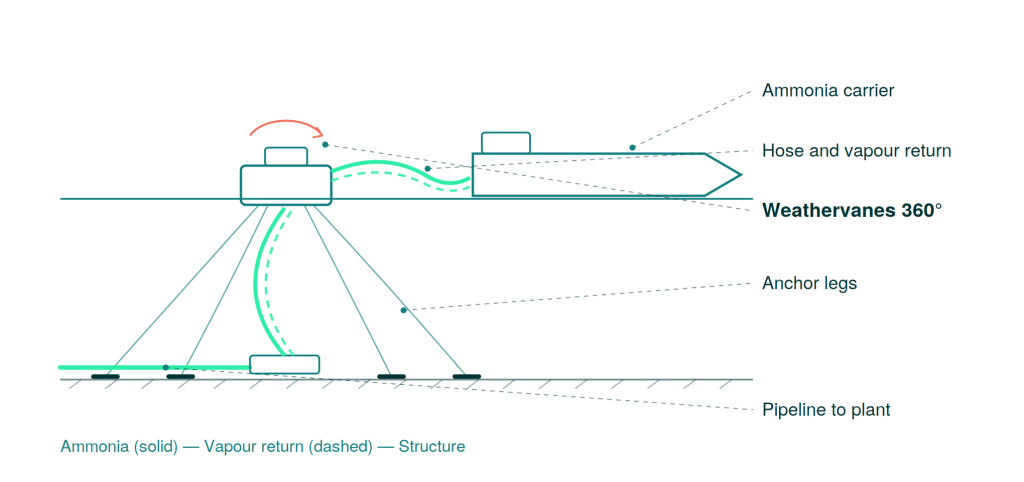
Single point mooring. Ammonia runs by seabed pipeline to a buoy five to ten kilometres offshore, where a moored carrier swings freely with wind and current.
Why Ammonia
Ammonia is one of the world’s largest industrial commodities. It makes around 185 to 200 million tonnes every year, almost all of it through the Haber-Bosch process using hydrogen drawn from fossil gas. It feeds a large share of the world’s food supply, and it is among the most carbon-intensive processes in heavy industry, responsible for close to two per cent of global CO₂ emissions.
That makes ammonia unusual among decarbonisation targets. The demand to clean it up exists today and does not wait on any wider energy transition arriving first. Green ammonia is made from water, air and renewable electricity rather than gas. It moves through the same ships and terminals as conventional ammonia, and serves the same customers, without the emissions. The Green Ammonia Plant sets out how. GGE’s first market is not an industry to be created but an essential one to be supplied cleanly.
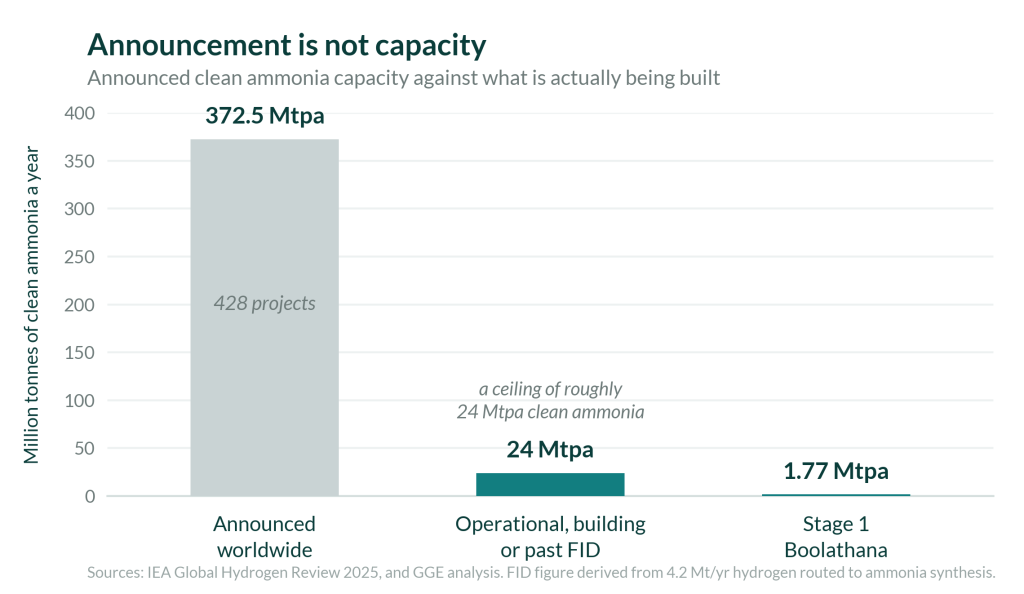
The supply side is thinner than the headlines suggest. Developers have announced roughly 428 clean ammonia projects worldwide, summing to some 372 million tonnes a year. The IEA’s Global Hydrogen Review 2025 finds that those actually operational, under construction or past final investment decision amount to around 4.2 million tonnes of hydrogen by 2030 – a ceiling of roughly 24 million tonnes of clean ammonia. Credible 2035 supply lands somewhere between 80 and 150 million tonnes against practical demand of 55 to 135 million tonnes. Announcement is not capacity. The constraint on this market is projects that can actually be built.
Stage 1’s 1.77 million tonnes a year would represent around 1.3 to 3.3 per cent of that 2035 market.
Source: IEA Global Hydrogen Review, 2025
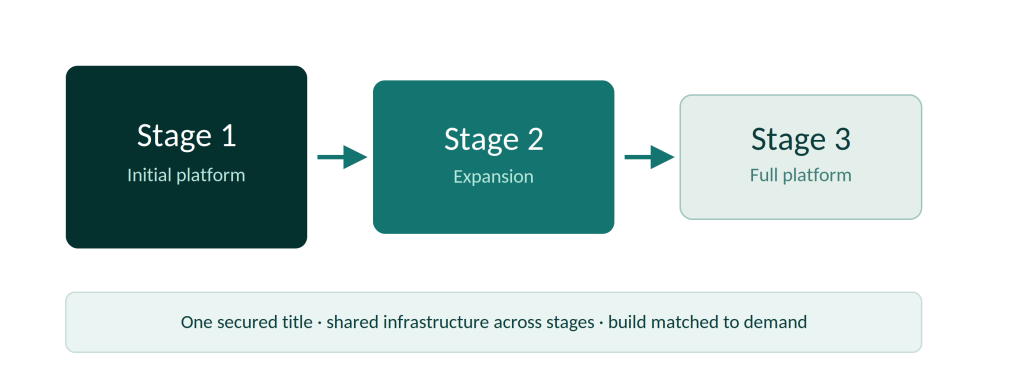
Boolathana is designed to be built in stages, growing into demand rather than all at once.
Stage 1 is a multi-gigawatt platform of wind, solar and battery storage, with production beginning as soon as it is viable rather than waiting on completion, so the plant generates product well before it is finished.
Beyond Stage 1, the same secured title and shared infrastructure support expansion.
Staging is deliberate: it matches build to offtake, shares infrastructure across stages, and lets the platform scale as its markets mature.
Proven, Not Proposed
Independent consultants have validated the resource. The Pre-Feasibility Study is complete, a structured screen of potential environmental impacts identified no constraint that would, on a desktop basis, preclude the project. GGE is raising development capital now to carry Boolathana to a Final Investment Decision – not to build it; construction is financed after that decision.
Boolathana is a project of the kind Western Australia’s project-facilitation frameworks exist to support, including the established Lead Agency Framework and the strengthened Priority Projects regime introduced in 2026.
The full technical, environmental and commercial detail is available to qualified counterparties under NDA.
Explore The Platform
Green Ammonia Plant
How the resource becomes product: the conversion train, firming, and staged capacity
Data Centres
Firm, 24/7 renewable power for continuous compute, generated and firmed on site.
Sovereign Supply
Green nitrogen made onshore, for Australian farming, mining and transport.
Land & Community
Tenure under a Diversification Lease, Traditional Owners, environment and community benefits to the region.
Questions that matter
Direct answers on cyclone exposure, fossil-free operation, tenure, equipment, approvals and offtake.
Contact us
Have any questions?
For enquiries about Gascoyne Green Energy or
the GGE Boolathana Project please get in touch.